How Many Strands of Wire for a Cattle Fence? A Chinese Supplier's Professional Guide
Confused about how many wire strands your cattle fence needs? As a leading Chinese fence supplier, we share expert advice based on fence type, cattle age, and environment to help you make the right choice.
tonybuy
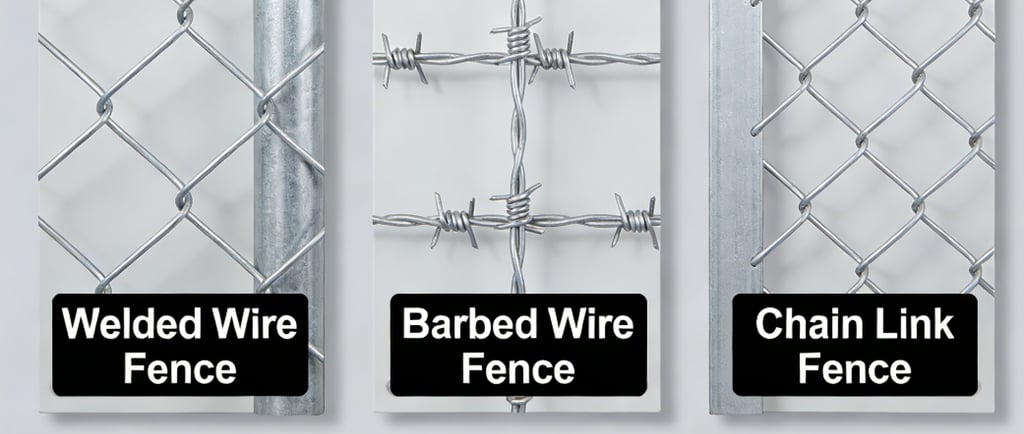
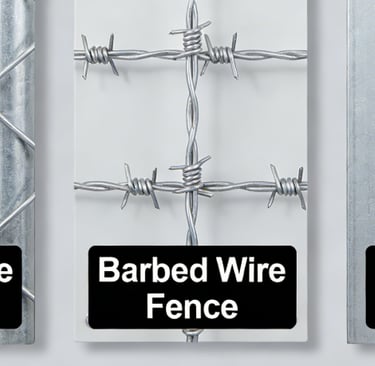
When it comes to cattle fencing, one of the most frequently asked questions we receive from global buyers is: "How many strands of wire do I need?" The answer, as experienced Chinese fence manufacturers, is not a one-size-fits-all number—it depends on multiple critical factors including the type of fence, the age and breed of cattle, the intended use (permanent vs. temporary), and environmental conditions. In this guide, we’ll break down the professional recommendations that have helped our clients across farms, ranches, and pastures worldwide build safe, durable, and cost-effective cattle enclosures.
First, let’s clarify the core principle guiding wire strand selection: the fence must effectively contain cattle while preventing escapes and minimizing injury. Cattle, especially adult bulls or energetic calves, exert significant force when leaning against or testing fences, so the number of strands directly impacts the fence’s structural integrity. Below, we detail the standard recommendations for the three most common fence types supplied by Chinese manufacturers: barbed wire fences, woven wire fences, and electric fences.
For barbed wire fences, a classic and economical choice for cattle containment, the number of strands typically ranges from 3 to 5. As a cost-effective option widely exported from China, barbed wire relies on its sharp points to deter cattle from leaning or pushing. For basic containment of adult cattle in permanent pastures, 4 strands are the industry standard we recommend to most clients . The spacing between strands should be uniform, usually 12-18 inches apart, with the bottom strand 6-8 inches above the ground to prevent calves from crawling under. If the fence is intended for border areas or to contain more aggressive breeds (such as Brahman or Angus bulls), we advise adding a 5th strand to enhance security. For temporary cross-fencing within pastures, 3 strands may suffice, but we always remind buyers that temporary does not mean compromised quality—our high-tensile barbed wire with Class III galvanization ensures even short-term use durability .
Woven wire fences, known for their sturdiness and safety, are another popular product from Chinese suppliers, especially for farms with both adult cattle and calves. Unlike barbed wire, woven wire uses horizontal line wires (strands) connected by vertical stays, creating a mesh structure. The number of strands (horizontal wires) in woven wire cattle fences typically ranges from 6 to 12, with the exact number determined by the fence height . For example, a 47-inch (1.2-meter) high woven wire fence, one of our best-selling specifications, usually has 10 horizontal strands . This configuration effectively prevents calves from squeezing through and stops adult cattle from breaking through the mesh. We often customize woven wire fences for clients in humid or coastal regions, using aluminum-coated or high-zinc galvanized wire (230g/m² zinc coating) to enhance corrosion resistance, with strand counts adjusted based on the client’s specific height requirements—ranging from 0.8 meters (6 strands) to 2.1 meters (12+ strands) .
Electric fences, favored for their flexibility and low maintenance, have distinct strand requirements. Cattle are sensitive to electric shocks, so fewer strands are needed compared to barbed or woven wire. For permanent electric fences using high-tensile wire (a specialty of Chinese manufacturers), 2 to 4 strands are standard . If containing only adult cattle, 2 strands are sufficient—placed at 18 inches and 36 inches above the ground, with at least one electrified strand at nose height . For farms with both cows and calves, we recommend 3 to 4 strands to prevent calves from slipping under or through. Our electric fence wires are 12.5-gauge high-tensile steel with a minimum breaking strength of 170,000 psi, ensuring they can withstand cattle impacts while maintaining tension . For temporary electric fencing (e.g., for rotating pastures), 1 to 2 strands are enough, and we often supply lightweight polywire options for easy installation and transportation.
Beyond fence type, other factors influence strand selection that Chinese suppliers prioritize when advising clients. Climate plays a key role: in areas with heavy snowfall, we suggest adding 1 extra strand to account for snow accumulation that may lower the effective fence height. Terrain also matters—fences on sloped land may require more strands to maintain consistent containment across uneven ground. Additionally, the client’s budget is a practical consideration: while more strands mean higher durability, we work with buyers to find the optimal balance, such as combining 4 strands of barbed wire with a lower woven wire base for cost savings without compromising safety.
As a Chinese supplier with years of experience exporting cattle fencing worldwide, we emphasize that the "right" number of strands is ultimately tailored to the client’s unique needs. Our production process includes strict quality control for each strand—ensuring consistent wire gauge, uniform tension, and reliable corrosion resistance. We also provide detailed installation guides, advising clients on post spacing (10-30 feet depending on strand count) and bracing systems to maximize fence lifespan .
In summary, the recommended number of wire strands for a cattle fence is: 3-5 for barbed wire, 6-12 for woven wire, and 2-4 for electric fences. By working with a Chinese supplier that offers customization, you can get a fence with the exact strand count, wire material, and coating to suit your cattle type, environment, and budget. If you’re unsure about your specific requirements, our team is always available to provide personalized recommendations based on your farm’s details—ensuring you get a fence that’s safe, durable, and cost-effective.