7 Common Cattle Fencing Mistakes: Insights from Chinese Suppliers to Avoid Costly Errors
Learn the most frequent cattle fencing mistakes from Chinese manufacturers’ decades of expertise. Avoid undersized posts, wrong energizers, and poor grounding to build durable, cost-effective enclosures that protect your herd.
tonybuy
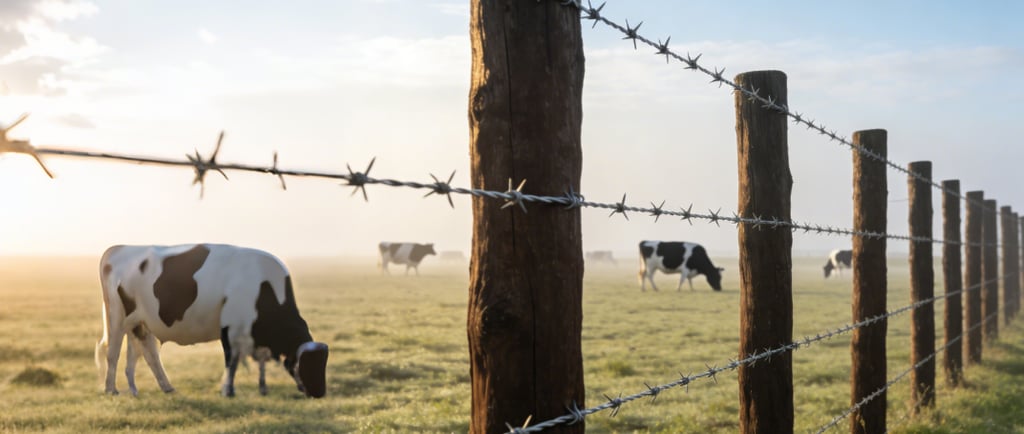
As a leading Chinese supplier of cattle fencing materials, we’ve supported global ranchers for years. Time and again, we see the same installation and material choices derail otherwise solid fencing projects. These mistakes don’t just waste money—they risk livestock escape, property damage, and safety hazards.
Below, we break down the most common errors, share our factory-tested solutions, and answer key questions from our clients worldwide.
1. Undersized or Poorly Anchored Corner Posts
Corner posts bear the entire tension of your fence, but many ranchers skimp on size or depth. Chinese manufacturers recommend 8-inch diameter posts for net wire fences and 6-7 inches for high-tensile systems . Even strong posts fail if buried less than one-third their length—especially in sandy or soft soils .
Solution: Use pressure-treated wood or galvanized steel posts (our factory’s top-selling option for durability). For maximum stability, install a “floating diagonal” brace system .
2. Incorrect Post Spacing
Overcrowding posts (16-20 feet apart) wastes materials, while spacing them too far (over 100 feet) causes sagging. Many users mimic barbed wire spacing habits, which don’t apply to modern high-tensile or net fencing .
Solution: Follow our supplier guidelines: 50-70 feet for high-tensile wire and 80-100 feet with “stay” supports for electric systems . This balances elasticity and stability.
3. Mismatched Energizer Size for Electric Fencing
A common mistake is choosing an energizer based on cost, not fence length. Undersized units deliver weak shocks, while oversized ones short out easily in vegetation .
Solution: Calculate 1 joule of output per mile of fence, regardless of wire strands . Our factory recommends low-impedance energizers for consistent performance—they’re a top-requested add-on for global orders.
4. Neglecting Proper Grounding
Poor grounding is the #1 reason electric fences fail. Many users reuse rusty T-posts as ground rods or install only one rod, resulting in weak or no shocks .
Solution: Install 3+ galvanized ground rods (6-8 feet long) spaced 10 feet apart . Our suppliers include compatible ground clamps with every electric fencing kit to ensure solid connections.
5. Mixing Incompatible Metals
Combining steel wire with copper components causes electrolysis—corrosion that weakens connections and ruins shocking power . This mistake shortens fence lifespan by 30-50%, based on our factory’s quality data.
Solution: Use matching galvanized metals (our standard offering) or corrosion-resistant fasteners. We pre-test metal combinations to avoid compatibility issues.
6. Skimping on Material Quality
Choosing cheap, thin-gauge wire or uncoated posts saves money upfront but leads to frequent replacements. Chinese manufacturers prioritize galvanization and high-tensile steel—materials that resist rust and withstand harsh weather .
Solution: Opt for 12-14 gauge galvanized wire (our best-selling thickness) and treated posts. They cost 15-20% more initially but last 3x longer .
7. Ignoring Terrain and Vegetation
Failing to account for slopes, wet areas, or tall grass undermines fence performance. Wet vegetation drains electric fence power, while unlevel terrain creates gaps for cattle to escape .
Solution: Install lower wires on switches to turn off during wet seasons . For slopes, adjust post height to keep wires taut—our technical team provides custom layouts for uneven land.
FAQ: Common Questions from Our Global Clients
Q: Can I use solar energizers for large pastures?
A: Yes—our factory supplies solar-powered units with oversized panels for low-sunlight regions. Charge them for 2 weeks before installation to maximize battery life .
Q: How do I calculate material quantities correctly?
A: Share your pasture dimensions and soil type with us. We provide free material lists (including wire, posts, and fasteners) to avoid shortages or overordering .
Q: Is barbed wire still a good choice for cattle?
A: For beef cattle or bulls, yes—but use 5-strand systems with proper tension. Our factory offers galvanized barbed wire that resists rust better than standard options.
Building effective cattle fencing starts with avoiding these common mistakes. As Chinese suppliers, we combine cost-competitive materials with decades of on-the-ground expertise to help you get it right the first time.
Would you like me to create a custom cattle fencing material checklist tailored to your pasture size and climate? It includes our top-recommended products and installation timelines to streamline your project.